2331 St. Claude Ave and Spain, New Orleans, LA 70117 • 504-525-2767 • 504- 710-4506 (c) • Tues-Sat 11am-5pm • Directions
|
2331 St. Claude Ave and Spain, New Orleans, LA 70117 • 504-525-2767 • 504- 710-4506 (c) • Tues-Sat 11am-5pm • Directions |
| Harry Moore and Malcolm McClay
The Tale of Two Cities: New
Orleans, Louisiana, and Cork,
Ireland.
click on any image for enlargement
|
A Tale of Two Cities is a documentary photography project that focuses on two cities: New Orleans, Louisiana, USA and Cork, Ireland. With a title borrowed from the Charles Dickens novel of 1859, the project takes a look at two cities that have experienced unprecedented change over the last few years. Cork, like much of Ireland has experienced an economic boom that brought with it opportunities never thought possible. With urban development creating a rapidly evolving cityscape and profound shifts in demographics, the city is undergoing enormous change. New Orleans has experienced the opposite fate. After Hurricane Katrina made landfall on August 29th 2005, the worst flooding in the area's history devastated eighty percent of the city. New Orleans, like Cork, is historically a port city; one is on the Mississippi while the other is on the river Lee. Geographically placed on the southern coast of both countries, both cities are relatively small and compact hugging their respective rivers. Culturally strong and independent, they also both share a long history with the sea. A Tale of Two Cities brings together two artists, one from each city. Harry Moore lives and works in Cork and has created a series of pinhole photographs of that city while Malcolm McClay has documented the rebuilding of New Orleans. Both artists have worked together to create two bodies of work that appear quite different, yet share common ground. |
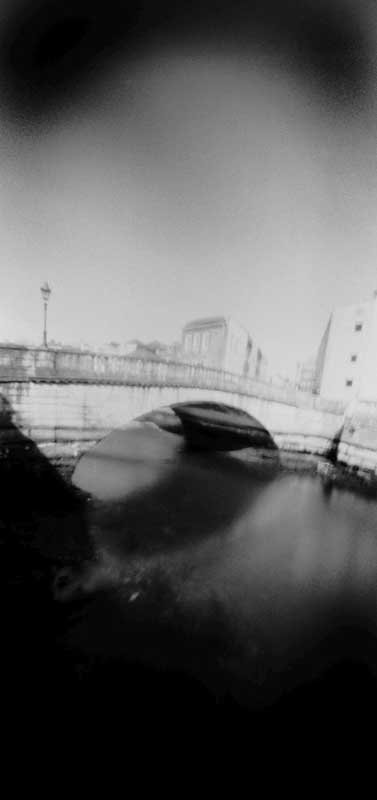 Harry Moore Parliament Bridge Cork, Ireland 2003 |
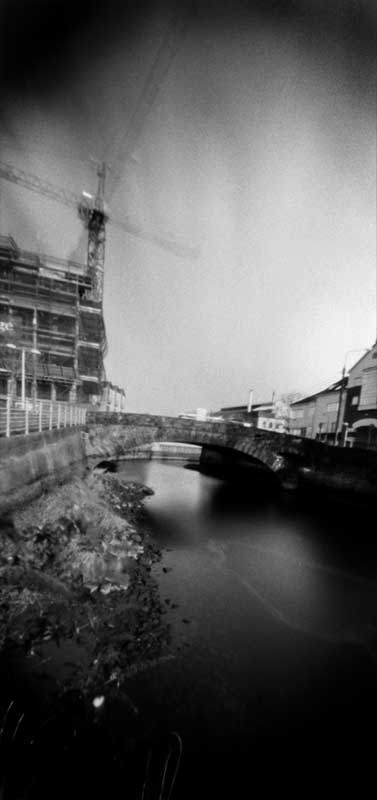 Harry Moore Clarkes Bridge, low tide Cork, Ireland |
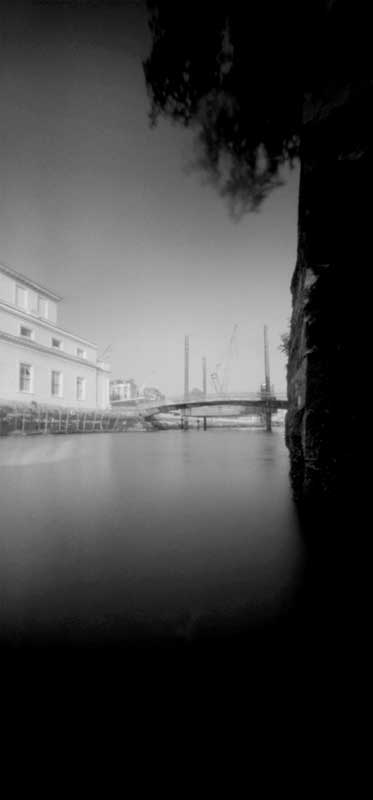 Harry Moore Nano Nagel Bridge, Cork, Ireland 2002 |
| Malcolm
McClay's photographs and accompanying stories are a tribute to the
people of New Orleans. Each photograph has been printed and then the
homeowner has written his or her story in the sky around and above
their house. The stories take us from Hurricane Katrina to the present,
with each resident focusing on the aspects of rebuilding and recovery
that affected them the most. Collectively, the photographs and stories
become a testament to the resilience and determination of the people
involved. Harry Moore, using pinhole technology photographed the bridges of Cork, always when the river levels were at their lowest revealing the tide lines on the stone and metalwork, reminiscent of the New Orleans dwellings. Long exposure times of up to 40 minutes removed any images of people and movement from the shots. He views the bridge as a neutral area, no man's land, a point of not belonging to either side, a symbol of connectivity, prominent in the City and always above the water. (The lunar tidal range of the river Lee can be over 15 feet between the highs and lows). Cork is subject to flooding, and should future development in Cork not be responsive, the potential for drastic flooding will be increased substantially. Property developers need to heed climate change predictions and consider the whole of society, local and elsewhere, before covering the land with icons of their own power and self-importance.
|
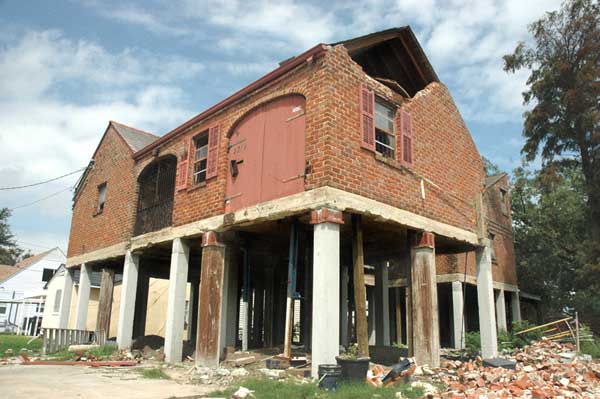 Malcom McClay House New Orleans |
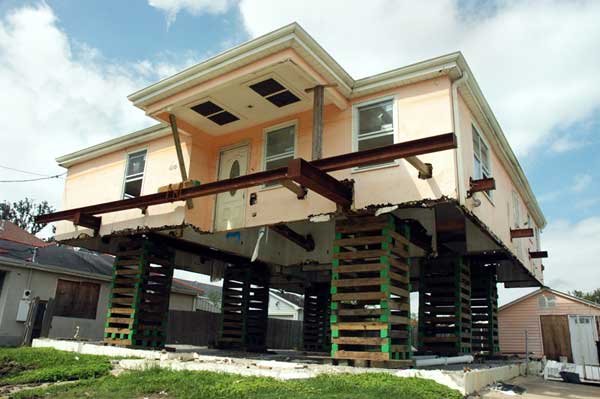 Malcom Mcclay House New Orleans |
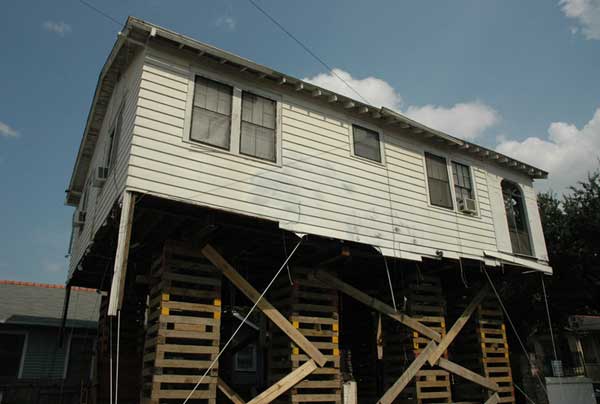 Malcom McClay House New Orleans |